King's College has a senior management team of 10. Photo / Bruce Holloway
One Auckland private school pays its principals an average of $370,995 annually, enough to exceed pay rates of most Cabinet members and placing the educators as among the highest-paid charity executives in the country.
The Herald analysed private school financial reports filed with the Charities Register – the vast majority of private schools in New Zealand are structured as charities – assessing their disclosures of compensation packages for senior management.
The highest-paid private school managers in New Zealand earn an average of $370,995 each while overseeing the cluster of schools operating under the St Kentigern banner. The combined rolls of St Kentigern’s four schools appear to make the private institution the third-largest school in New Zealand.
The best-paid private school managers are largely based at Auckland institutions, unsurprising given the population base and cost-of-living-driven salary demands in New Zealand’s largest city, but Christchurch is revealed as an alternative centre of private education gravity with three of the 10 highest-paying institutions based in the garden city.
While comparable figures are not reported by the public school system, the Ministry of Education provided some ranges and averages for senior leaders in the state secondary sector. Pay agreements have salaries based largely on school size, with an average $201,700 paid to principals and $137,400 to deputies.
Taking one principal and two deputies as an equivalent senior management team, an average public sector school would be expected to report average executive pay of $158,833.
While this average is dwarfed by the private schools at the top of these pay rankings, they are not too far off those reported for private institutions – such as St Paul’s Collegiate, Rangi Ruru, Selwyn House, Waikato Diocesan School for Girls, and St Margaret’s College – who did not make this top-10 list.
The ministry acknowledged a “small number” of state principals at large schools made in excess of $300,000, and a similar proportion of deputies earned more than $200,000, which – outside chart-toppers St Kentigern and Dilworths – appears comparable to executive pay at the top of the private school sector.
The only registered charitiable school in this survey that did not publish, or provide on request, information on key management composition and compensation was Epsom girls’ school St Cuthbert’s College, which reported only that it paid key management nearly $2m last year – the country’s fourth-largest such package for a private school – but did not disclose how many staff this accounted for.
St Cuthbert’s principal Charlotte Avery said: “We do not provide further breakdowns such as fulltime equivalent numbers.”
This exercise was also unable to assess at least one major player in the private school market. ACG, which runs a string of schools in Parnell, Strathallan, Sunderland and Tauranga, operates not as a charity, but as a private limited liability company owned by a private equity fund and has no requirements to file financial statements or report executive compensation.
Here are the top pay packets at the top private schools.

1: St Kentigern Organisation. Average executive pay: $370,995 ($2.2m across six positions)
Head and shoulders above its peers in the private and public sectors in terms of executive pay, the sprawling St Kentigern education conglomerate also jostles for a podium placing as New Zealand’s largest school.
An early 2024 survey of the entire charitable sector assessed St Kentigern as having the 10th-highest-paid charitable executives – behind only our biggest universities, large iwi and healthcare mega-provider St John – and reported salaries at the top of the school in the two years since have increased 31%.
Comprising no fewer than four schools (a coed college, a boys’ and a girls’ primary, and a preschool), St Kentigern also has an unusual management structure that partly explains its chart-topping executive salaries: St Kentigern’s six key management personnel include the four schools’ principals, a chief operating officer, and an overseeing “executive trustee” in the form of Dr Kevin Morris.
Its combined roll of 3506 makes it easily the largest private school in the country and among the largest schools in New Zealand. St Kentigern appears to be smaller than only behemoth Rangitoto College and close in student enrolments to second-largest state school Mount Albert Grammar.
With this size – and steep fees for attendance – comes financial heft: St Kentigern’s revenue streams are vastly larger than all other schools in New Zealand and last year it booked $90m in income.
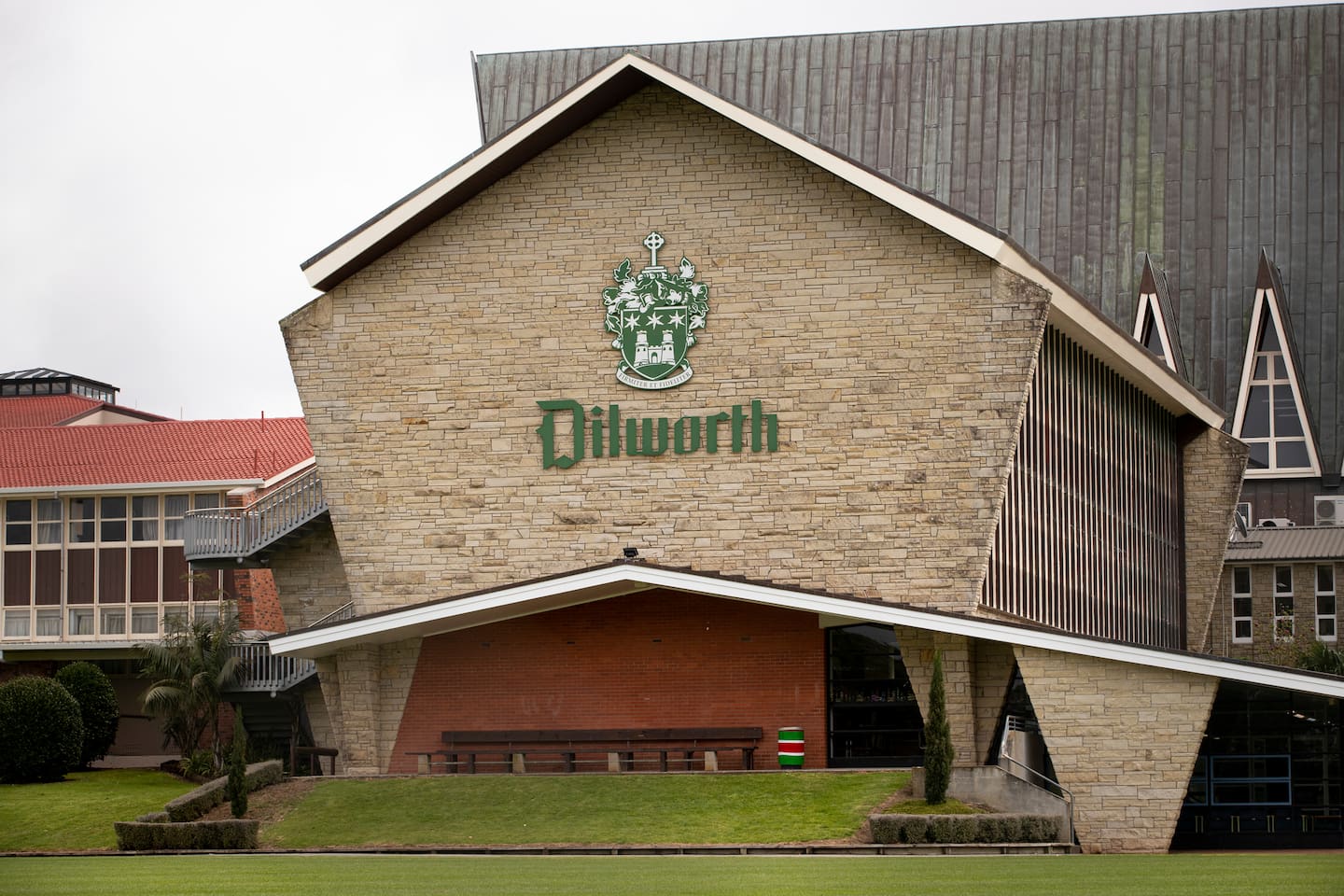
2: Dilworth School. $320,750 ($2.6m, 8 positions)
A unique institution, Dilworth is one of the smallest private schools on this list by roll size, but requires considerably more resourcing because its student body are all boarders. And its balance sheet suggests it operates as a large property company with a school bolted on. Governing Dilworth’s billion-dollar property portfolio – which covers tuition costs for its student body – means its executives have a more commercial bent than other entries on this list.
This also explains why it leads league tables in school trustee payments. While most private (and all public) schools have entirely voluntary boards of trustees, Dilworth reported paying its six trustees $534,000 last year.
Its key management personnel are identified as including both the headmaster and its chief executive, and six other members of a senior management group.
Dilworth has experienced a torrid half-decade. Explosive allegations of historic sexual abuse led to more than a dozen former staff being convicted in courts and the school appointed Dame Silvia Cartwright in 2022 to independently investigate the school’s management of complaints over the preceding decades.
Dilworth’s provisions for its inquiry and redress payments to hundreds of former students who suffered abuse have had the trust book $70m in expenses to date.
This significant moral and financial challenge also came at a time when Dilworth’s asset base – almost entirely Auckland property – ran into a sustained flat market. Dilworth began borrowing and selling properties to cover school expenses and has experienced years of equity declines, and is no longer a billion-dollar school.
From a peak of $1.2b in equity in 2022, its most recent report – dated December 2024 – shows net assets now standing at $991m.

3: Kristin School. $275,738 ($1.9m, 7)
The newest school on this list, founded in 1973, Kristin offers co-educational schooling all the way from preschool to secondary.
While last year the school recorded an operating surplus, a severe revaluation of its expansive grounds in Albany was largely responsible for a $61.8m revaluation loss that had equity decline by a third.
4: Diocesan School for Girls. $235,751 ($1.9m, 8)
The first – and sole – girls-only school on this list, Auckland Dio was founded in 1903, and its central Auckland grounds in Epsom are valued at over $100m.
The school has had a busy year in credit management, with a Westpac loan of $10m taken out in earlier years being repaid, and new facilities totalling $32.5m being established this year.

5: St Andrew’s College. $229,001 ($1.6m, 7)
The first non-Auckland entry on this list, St Andrew’s may have conceded a 60-year head-start to its crosstown rival Christ’s College, but has grown to be the garden city’s largest private school.
St Andrew’s offers boarding options for boys and coed primary and secondary education.
The school’s bottom line received a substantial bump over the past year with $8m received in donations, a huge windfall given only $600,000 in such payments was booked the previous year.
6: King’s School. $222,212 ($1.1m, 5)
King’s School was spun off from King’s College in 1922, when the senior school moved to Ōtāhuhu and the old premises in Remuera were repurposed to offer primary education.
As a business, the institution is generating substantial surpluses. Off $26.4m in revenue last year, $9.6m was left over to add to the school’s bottom line.
Last year King’s School also raked in nearly $2m in donations, up from only $300,000 the previous year.

7: Christ’s College. $205,875 ($1.6m, 8)
Founded in 1850, Christ’s is the oldest private school in the country and was modelled on the upper crust of the English public school system.
Half the size of its crosstown private rival St Andrew’s, the elder institution still boasts – outside eccentric colossus Dilworth – the country’s largest private school investment portfolio. Over the past year, Christ’s College’s holdings in managed funds increased in value from $40m to $62m.
8: Scots College. $194,034 ($1.6m, 8)
The only Wellington contribution to this list is Scots College, founded in 1916 and run as a boys’ secondary school for more than 100 years until it began accepting girls in 2019.
The Scots College Foundation, a fundraising entity associated with the school, banked a $1m bequest over the past year. The foundation also manages a scholarship fund bankrolled by former student and NBA star Steven Adams. Records show the basketball scholarship fund has reached $461,816 and last year paid out $9295.

9: King’s College. $193,034 ($1.9m, 10)
Behind Dilworth’s billion-dollar property empire, the expansive grounds of King’s College’s Ōtāhuhu campus are the most valuable real estate owned by private schools in New Zealand. King’s College’s property is valued at $340m, atop a pile of $31m of investment assets.
With this asset base, accumulated over more than a century of operations and its position as Auckland’s highest-profile fee-charging school, King’s College’s position on this list is surprisingly low. This ranking can partly be explained by its unusually large key management team (10), which dilutes average salaries.
10th: Medbury School. $191,223 ($0.6m, 3)
The smallest school on this list and the second dedicated primary school, Medbury recently graduated into Christchurch’s old-school scene when it celebrated its centenary in 2023. Its average executive pay is boosted by having the smallest pool of key management personnel, with Medbury reporting it includes only the principal, deputy and a director of business services.
Matt Nippert is an Auckland-based investigations reporter covering white-collar and transnational crimes and the intersection of politics and business. He has won more than a dozen awards for his journalism – including twice being named Reporter of the Year – and joined the Herald in 2014 after having spent the previous decade reporting for business newspapers and national magazines.
- Stay ahead with the latest market moves, corporate updates, and economic insights by subscribing to our Business newsletter – your essential weekly round-up of all the business news you need.