Analysis: Looming ferry decision one of the most significant for coalition Government
THREE KEY FACTS
- The Government is expected to shortlist shipyards and issue more detailed ship specifications for new Cook Strait ferries by the end of this month.
- Minister for Rail Winston Peters has publicly noted interest from South Korea and Finland.
- A shipyard will be selected to build the new ferries by the end of this year.
It’s almost two years to the day the Herald launched its Dire Strait series to investigate the cause and cost of our ferry failures, how the Interislander fleet came to be in such a state of disrepair and how it’ll all be fixed.
In 2023, we had an answer to the most important question on that list – two mega-ferries had been ordered and were expected to replace Interislander’s increasingly unreliable fleet by 2026.
But we no longer have an answer to that question after the Government scuppered the mega-ferries due to exponential cost blowouts associated with portside infrastructure.
This unanswered question is of concern to all New Zealanders, given Cook Strait is an extension of State Highway 1 and a critical part of the country’s supply chain.
It’s why there is so much public interest in a looming decision for the coalition Government.
A spokesman for Minister for Rail Winston Peters said by the end of this month, the Government would shortlist shipyards and “issue more detailed ship specifications”.
This will lead to a Request for Proposal process after which a shipyard will be selected to build the new ferries.
The spokesman could not be more specific about that timeframe, but confirmed it will be by the end of the year.
“The request for expressions of interest has been open to all interested shipyards.
“To date, expressions of interest have been received from a wide range of shipbuilding companies across several countries. The minister has publicly noted interest from South Korea and Finland.”

‘Horror run’
The issue of the replacement Interislander ferries has been a major sticking point and a big test of the coalition parties’ ability to get agreement on something not foreseen or addressed in the coalition arrangements.
But there was something in the water long before this Government came to power.
In August 2021, the Kaiarahi ferry was “catastrophically” damaged and in need of European specialist assistance when its gearbox failed.
The ship was taken out of service for an entire year, with KiwiRail warning New Zealand’s supply chain would face challenges.
It was a sign of things to come.
The woes continued into 2022 as the service faced pressure from crew shortages, faults, delays and wild weather.
Former Ia Ara Aotearoa Transporting New Zealand chief executive Nick Leggett called it a “horror run” for KiwiRail, with trucks stranded on either side of Cook Strait.
Things had seemingly improved by the end of that year until the Kaitaki issued a mayday call in Cook Strait with 864 people on board in early 2023. All four engines had shut down in the middle of a roaring southerly.
Hundreds of people on board a ship drifting towards Wellington’s rocky shoreline was a nightmare scenario for those who had spent the past year battling to keep the Interislander’s ageing and increasingly unreliable fleet running.
The Dire Strait investigation revealed there’s no emergency towing vessel on standby to help ships in strife, uncovered nine non-conformity issues at the Interislander, and found passengers waited on the phone for five hours during mass cancellations.
The only bright spot was that KiwiRail had signed a $551 million fixed-price contract with Hyundai Mipo Dockyard in South Korea for two new rail-enabled mega-ferries to service Cook Strait and replace the present fleet.
Red flags
However, there were plenty of red flags in 2023 that all was not well with the project.
KiwiRail undertook a review of all aspects of the project to ensure costs were being managed prudently and Treasury called in independent consultants to review cost pressures.
Thanks to proactively released documents, we now know what was going on behind the scenes.
KiwiRail was telling then Finance Minister Grant Robertson that the budget for its mega-ferry project had blown out by more than a billion dollars.
This was particularly galling to Robertson because only a few months earlier, KiwiRail had assured him only an additional $300m would be required and that was the worst-case scenario.
The issue remained unresolved at the time of the general election and appears to have been considered so pressing that Nicola Willis met with the state-owned enterprise’s top brass about it before she was even sworn in as Finance Minister.
Greater Wellington Regional Council chairman Daran Ponter said at the time that KiwiRail “must be s***ting themselves” over the escalating cost of portside infrastructure.
Willis revealed the potential cost to the taxpayer was now “many times” what the Government initially signed up to.
A week later she announced the project was scuppered after costs for the associated portside infrastructure increased exponentially. The forecast project cost increased from $775m to at least $3 billion despite the mega-ferries costing $551m.
The Herald uncovered several revelations in the months following.
Ministry of Foreign Affairs and Trade (MFAT) officials had advised the Government on the risk to New Zealand’s relationship with Korea.
Some engine parts for Interislander’s mega ferries were already built and tested before the deal was called off.
KiwiRail terminated the contract only after receiving a letter from Willis and two months after the Government pulled the plug on the project.
Willis was told the contract with Hyundai Mipo Dockyard should be urgently renegotiated.
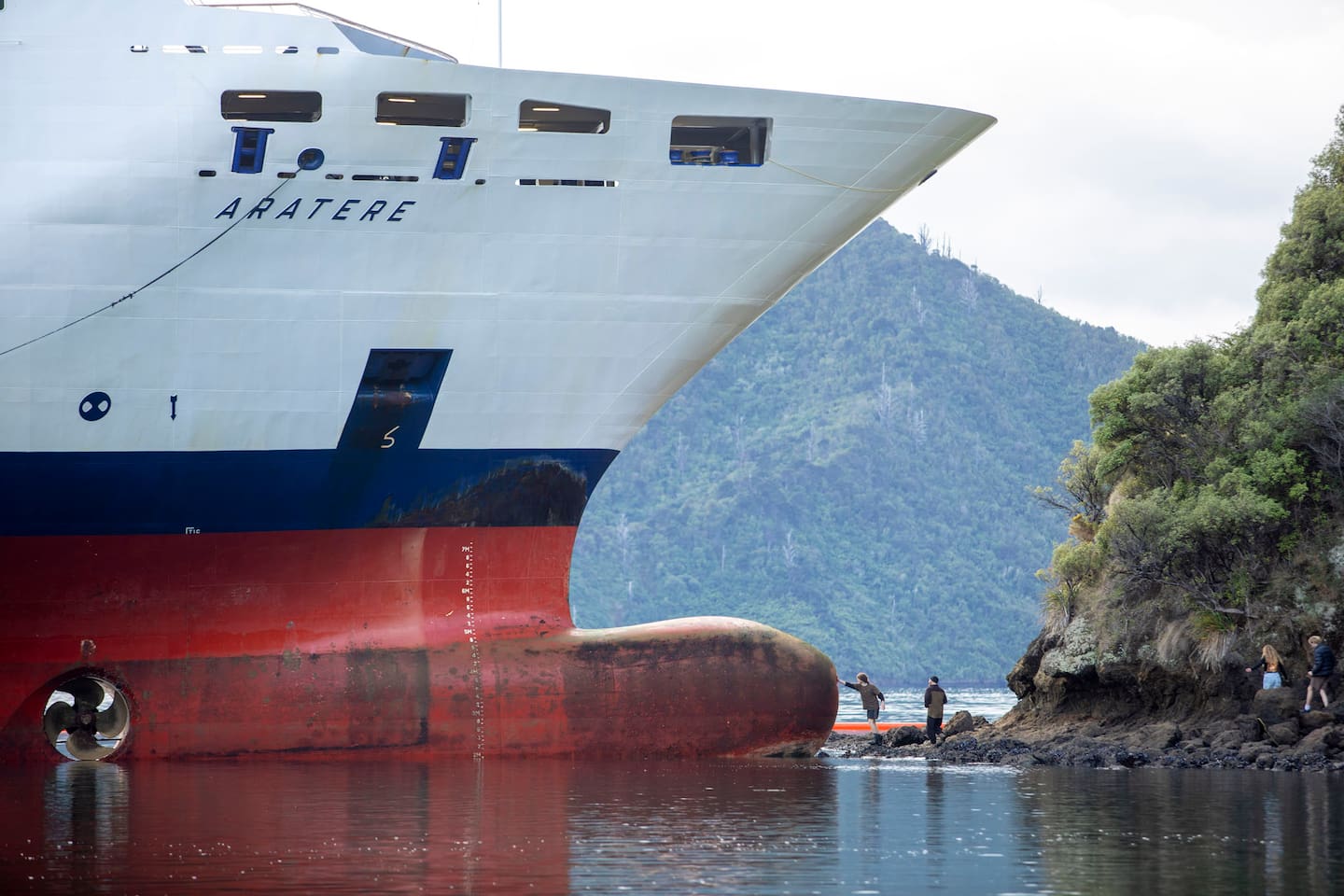
The stakes were raised in June 2024 when the Aratere ran aground due to a steering failure.
Willis announced that week that KiwiRail chairman David McLean would be retiring early.

This was unrelated to the Aratere grounding, but she had challenged KiwiRail’s spend on global management consultants McKinsey & Company the week before.
Willis said the spending was “excessive and not justifiable” and she would have problems defending it in public.
The ombudsman is reconsidering whether KiwiRail should be allowed to keep the consultant cost a secret.
Back to the drawing board
So, there was much anticipation at the end of last year around the Government announcing its alternative to the mega-ferries.
On December 11, the Government announced it would establish a Schedule 4A company called Ferry Holdings to procure the two medium-sized, rail-compatible ferries Willis had planned.
The Government also invited the private sector to submit alternative proposals for a ferry service that will be assessed alongside the procurement process in March.
Prime Minister Christopher Luxon also announced Peters would take over the responsibility of delivering the new ferries and appointed him Minister for Rail.
Peters essentially said he was going back to the drawing board to find a better plan than Willis’.
KiwiRail insists its ships are safe to run until 2029, but the longer the Government takes to decide on replacement ferries, the greater the risk of a serious incident happening in Cook Strait before the new ships arrive.
The future of Cook Strait crossings will be one of the most significant decisions the coalition Government makes this year.