Auckland City Rail Link could have been ‘half the cost’ - ex-CEO Sean Sweeney
Top infrastructure boss Sean Sweeney says New Zealand needs to stop gold-plating projects. As he leaves a big role in Dublin and prepares for a new job in Sydney, in an exclusive interview with senior correspondent Katie Bradford, the former City Rail Link CEO reveals he thinks the country’s biggest infrastructure project could have been built for half the price - and Christchurch’s new stadium for even less.
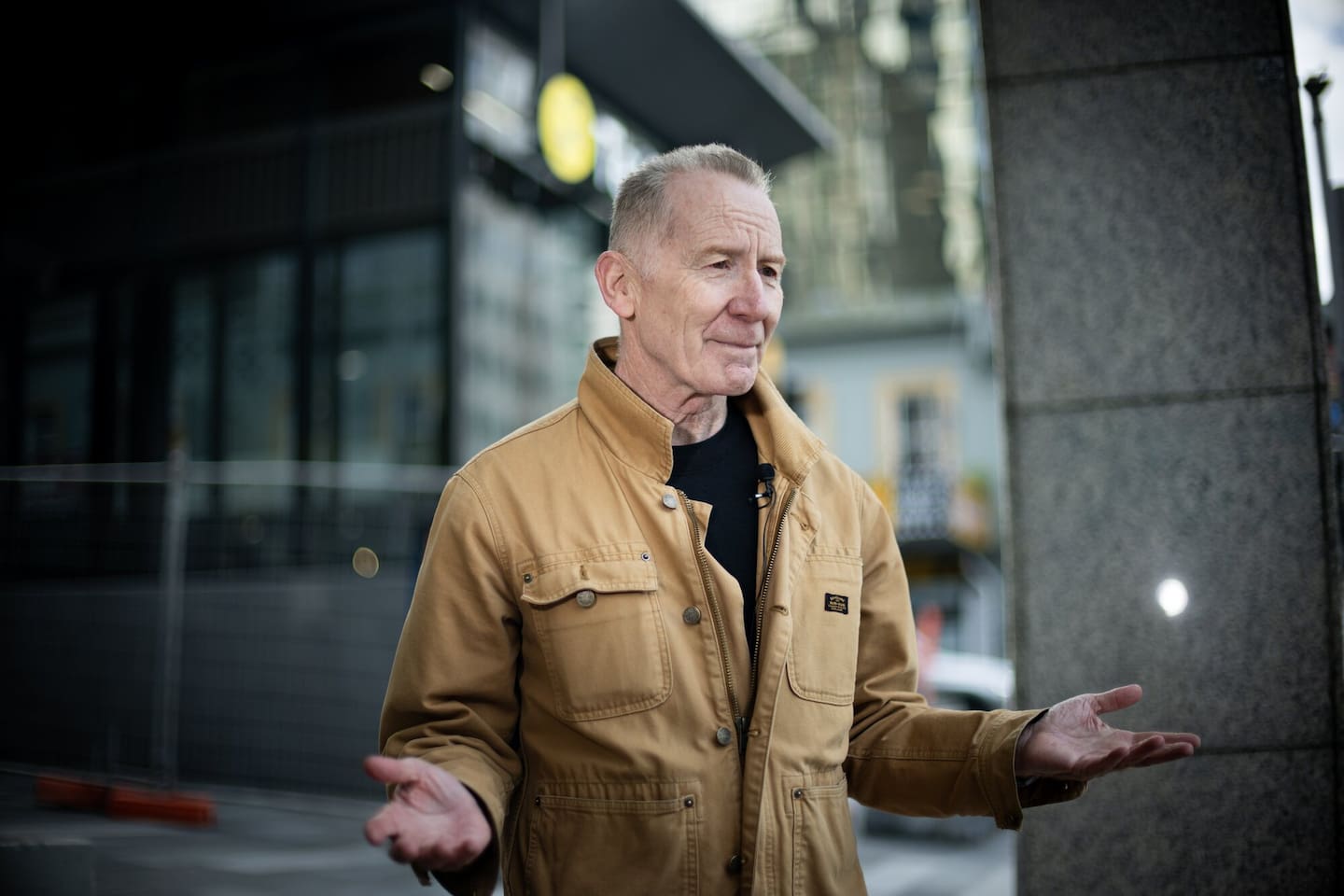
Collar up, motorcycle helmet under his arm, Dr Sean Sweeney admits he might lose some friends over his brutally honest comments about the cost of Auckland’s City Rail Link project.
But he’s not losing sleep over any mistakes he may have made.
“I do believe we’re not very good at specifying the scope, and I do believe in New Zealand we’re over-specifying jobs, and it’s making them too expensive, which means we do less of them,” he told the Herald in an exclusive interview.

Asked if that meant the City Rail Link (CRL) was over-specified and too expensive, the answer was simple.
“I’m not going to make any friends for saying this, but in a nutshell, yes.”
The former CEO of the CRL admitted he would do things differently if he had his time again.
The final cost of the project is expected to be $5.5 billion. That skyrocketed from the original $3.4 billion, because of inflation, scope changes and the pandemic.
In his six years in the top job, Sean Sweeney oversaw those cost increases and associated challenges.
But he left two years ago, jetting off to Dublin to oversee its MetroLink rail project.
At the time he was excited by what Dublin had to offer. The reality was different.
“When I left to go to Ireland, I had a view that they were doing a whole lot of things better than New Zealand. I’d probably say that’s not as clearcut as I thought it was, and I think New Zealand is doing some things better than Ireland, particularly in planning and speed to getting things built.
“Ireland is actually deeply haunted by the GFC. The country was almost placed in receivership. As a result of that, the Treasury has placed a series of rules to slow down the ability to spend public money.”
Watch full interview here:
Working in Europe allowed him to assess other projects and visits to cities such as Copenhagen opened his eyes.
“I’ve spent a lot of time with the people who built the Copenhagen Metros, they have been brutally disciplined about how they’ve specified scope. They’ve built very small, very affordable stations all through Copenhagen, at a quarter of the cost of the CRL.”
Two new stations – Te Waihorotiu and Karanga-a-Hape have been built as part of the CRL’s 3.45km twin-tunnel underground rail link.
The walls are covered in intricate designs and have multiple escalators. Auckland Mayor Wayne Brown has described the stations as “cathedrals”, because of their high ceilings.
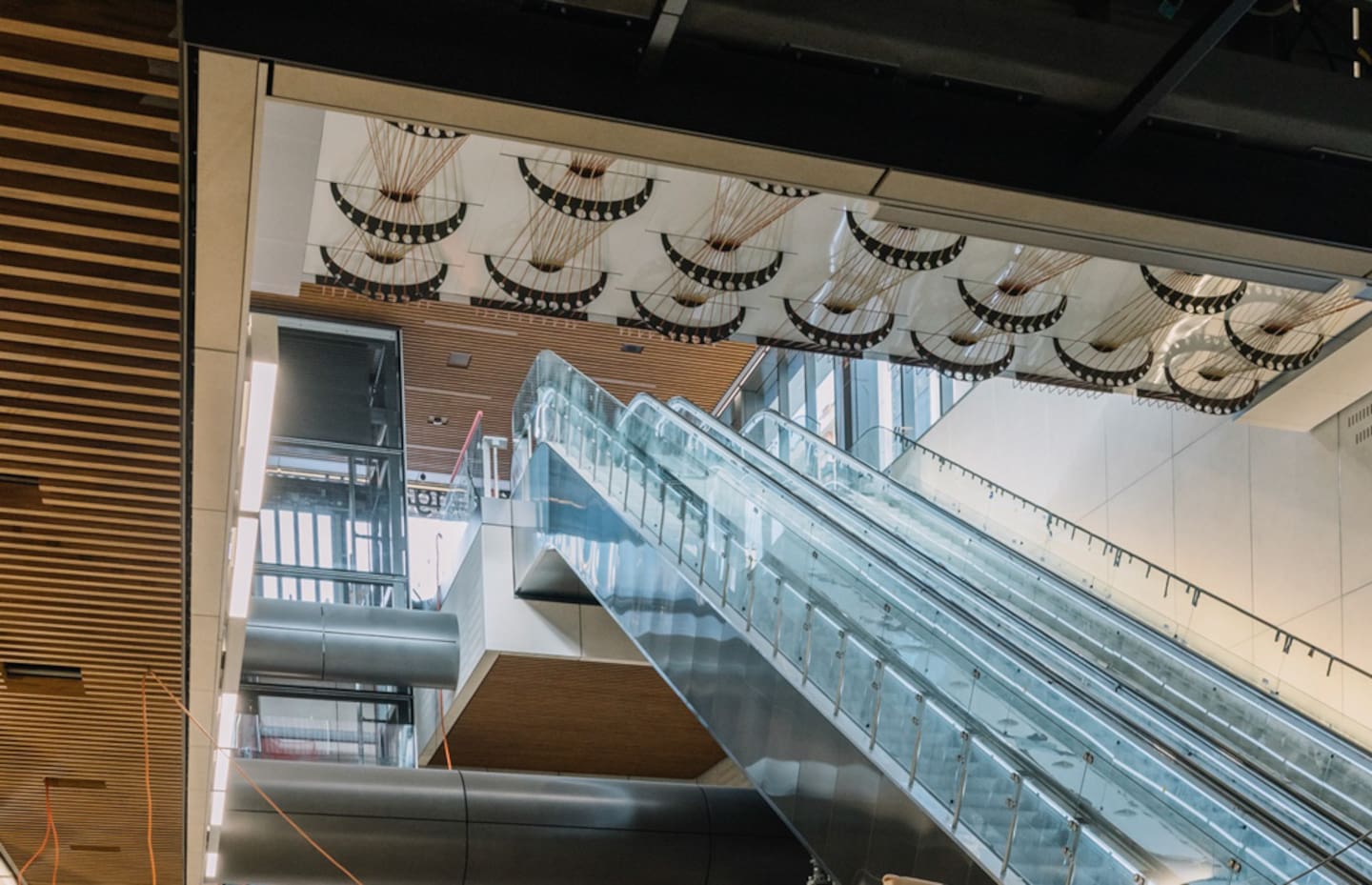
Sweeney agreed they were over-designed.
“I think we could have delivered this for half the cost, but it would have looked different. The stations would have looked quite industrial, and they would have been smaller, they wouldn’t have had anywhere near the extra facilities in them.”
The estimated saving – approximately $2 billion. But Sweeney suggested the project would be “more Toyota Corolla, less Rolls-Royce”.
He stressed the point – it would require a different approach to major project specification, a fully functioning heavy construction industry and a pipeline of work.
The Government of the time did ask the CRL company, Auckland Transport and KiwiRail to look at where costs could be saved before one of the funding boosts, he said.
“I probably didn’t have the experience in building metro stations then. AT and KiwiRail came back and said they couldn’t find anywhere to save money. And I didn’t have the expertise or the background to challenge them. If that was me now, I would have reacted quite differently to it.”
He said costs need to be screwed down right at the start of a project.
“You really need to get in when the designs are being done. When I turned up, the designs were done. This is all in the scope and specification.”
In 2018, the decision was made to lengthen the platforms at two stations from six cars to nine cars to future-proof the project.
“It was a decision that was on the table when I arrived. To be fair, everyone was terrified of another Auckland Harbour Bridge [which had to be expanded from four to eight lanes in its first decade]. And they were terrified of within two years, the whole railway being over-capacity.
“I now know the nine-car versus three-car probably doubles the cost.”
He said capacity issues would be better dealt with by running trains more frequently.
Wayne Brown would agree with that too. The Mayor is now a somewhat reluctant promoter of the project, recognising the immense benefits expected once it opens in the second half of this year.
Aucklanders would be proud of the stations once they opened, Sweeney believed.
“You’ll be very proud to be a Kiwi, and any tourist will know they’re in New Zealand. That’s beyond doubt. The issue I have is affordability,” he said.
Attention then turns to stadiums - Dunedin, and Christchurch’s just-opened, much-vaunted Te Kaha stadium.
“The Dunedin Stadium cost 25% of the new Christchurch stadium. Everyone in Christchurch is incredibly proud of the new stadium. Did they need all of that? For four times the cost.”
The multi-use Te Kaha stadium cost $683 million, funded by taxpayers and ratepayers. Dunedin’s was completed in 2011 and cost $225 million.
“I think New Zealand, where it is in the world at the moment, needs to do more Dunedin stadiums and less Christchurch. Now everyone in Christchurch is going to hate me for saying that, but we’re not an infinitely wealthy country. It’s about spending our money wisely to do more with less.”
All of this points to the much wider problems in the infrastructure sector, he believed.
“We have a tendency to gold-plate projects. I’m not the only one using the word gold-plating, by the way.”
New Zealand has a multibillion-dollar infrastructure deficit.
The fact he is headed across the Ditch for his next role is another symbol of the issues the sector faced.
“This is going to sound really awful, but there are no jobs big enough for me to do here. Where I add the most value is in multibillion-dollar projects. And there are no multibillion-dollar projects going on in New Zealand.”
The industry has long called for a solid pipeline of projects to keep people in the country and on the tools.
Approximately 12,000 construction jobs were lost last year, according to Statistics NZ.
A 2025 report by the Association of Consulting and Engineering found about 1200 engineers had lost their jobs in the past year, with many of those heading overseas.
“I have a view infrastructure is an investment in the future health and wealth of this country,” Sweeney said.
“And New Zealand has basically taken a holiday from doing much in this area since the 1990s. We’ve got a big backlog of projects we should be doing and I understand there’s affordability and funding issues, but the country needs those to go forward. And a plan to get them right.
“One of the ways to make it cheaper is to have a pipeline that people are committed to, because then the industry can set up, do the first job, then the second job and they can keep the expertise.”
The next mega-project on the horizon is Auckland’s second harbour crossing.
Geotechnical work has been carried out on the harbour to look at potential options for the crossing. The choice is likely to be between another bridge or a tunnel.
Wayne Brown has been vocal about his preference – a bridge across Meola Reef.
Sweeney favours a tunnel.
“I’ve done no detailed engineering work on this. What I’ve learned, in my last eight years, that tunnelling is getting cheaper and cheaper and safer and better. And I think we could do a very good solution with tunnels.”

Infrastructure Minister Chris Bishop has been talking to Labour about the crossing and hopes it will have bipartisan support.
And recently, Bishop has announced the Infrastructure Commission will have greater powers, in an attempt to bring in more independence in decision-making over projects.
“I think the Infrastructure Commission should be listened to more, because they have a deep and vested interest in it and a lot of it makes sense.
“Chris Bishop is really trying to get his head around the complexities of infrastructure, and I think he gets it. He seems to be more understanding of the need for a pipeline of infrastructure work as well now.”
For now, Sweeney is heading to Australia to head the A$30 billion ($36.6b) Inland Rail Project. The 1600km freight line will connect Melbourne and Brisbane via regional Victoria, New South Wales and Queensland.
He’ll be busy on that for the next few years.
But one day, he hopes the phone will ring about another big project here.
“I’ll take that call.”
Katie Bradford is a senior correspondent at the Herald. She has been a broadcast journalist for over 20 years and was based in the press gallery for ten years. She specialises in politics, business and Auckland issues.