Tory Whanau testifies at Waitangi Tribunal: Racism, sexism and women-hating abuse drove me out of the country
Tory Whanau left New Zealand after a term as Wellington’s first Māori mayor. Now she tells the Waitangi Tribunal the abuse she suffered forced her out. David Fisher reports.
Former Wellington Mayor Tory Whanau says sustained racist, misogynistic and sexualised abuse during her time in office ultimately drove her from politics - and out of New Zealand.
In evidence to the Waitangi Tribunal this morning, Whanau described years of online harassment, sexualised rumours, heightened media scrutiny and political attacks.
She said taken together they created “an environment that enables sustained harm, particularly for wāhine Māori. The purpose and effect of this behaviour was dehumanisation.
“It attempted to reduce a sitting Mayor to racist caricatures rather than engage with policy, governance, or leadership.”
Whanau’s evidence was to the Tribunal’s Mana Wāhine inquiry into issues affecting Māori women, including whether the Crown’s systems and institutions failed to protect and support Māori women in leadership, governance and public life.
Whanau’s evidence comes days after TVNZ political editor Maiki Sherman resigned, saying she had faced an “unprecedented ... level of scrutiny” creating “enormous pressure”. Sherman was the first wahine Māori appointed as the political editor of a mainstream broadcast newsroom.
Whanau’s mayoral term
Whanau served one term as Wellington mayor from 2022 to 2025 as the first Māori person elected to the role.
Her mayoralty was marked by fierce political disputes over Wellington’s direction and was subject to ongoing speculation over her personal life, conduct and drinking.

That included widespread rumours claiming video existed of her performing a sexual act at Wellington’s Havana Bar in 2023. Whanau repeatedly denied the claims and said no such video existed.
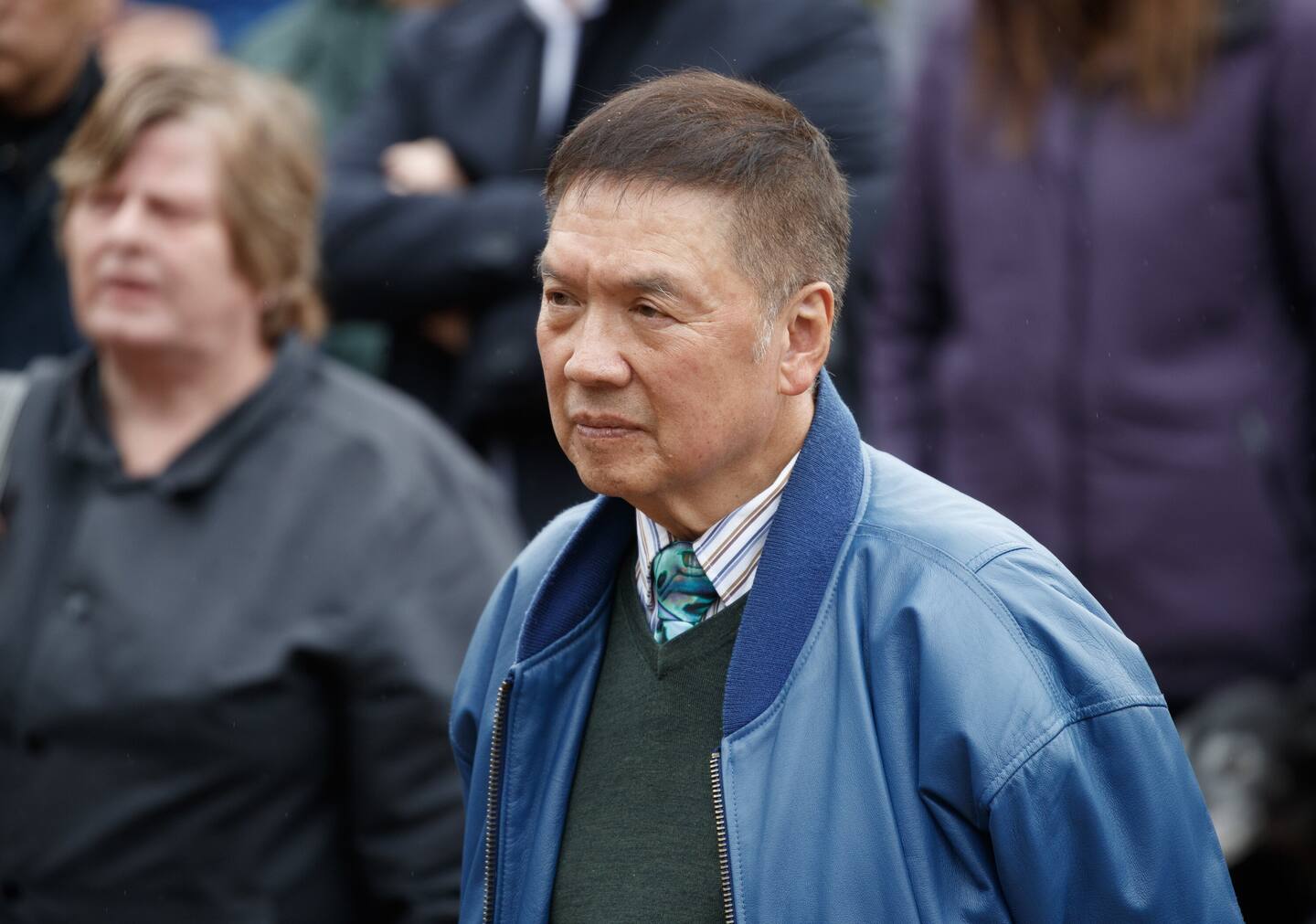
The Herald revealed Wellington councillor and mayoral candidate Ray Chung was behind an email containing explicit sexual rumours about Whanau, including claims she had engaged in “tempestuous” drug-fuelled sex, and references to her “pendulous soft breasts”.
The controversy escalated after the Herald revealed Auckland councillor Maurice Williamson was recorded discussing the rumours during an Auckland Council committee meeting.
Whanau did not stand for mayor again, instead unsuccessfully running for Te Whanganui-a-Tara Māori ward. After the election, she said she was moving to Australia - in part citing being subjected to harassment and misinformation.
In evidence to the tribunal, Whanau said the rumours were part of years of sustained abuse.
“These comments continued consistently across Facebook, X, TikTok, and email over more than two and a half years, based on events that never occurred and were repeatedly denied.”
Rumours and abuse
Whanau said she was subject to “sustained and highly sexualised disinformation campaigns” running from 2023 through to the end of her term.
She said those rumours were generated by Chung and another councillor, and “many right-wing commentators online”.
She said political debates over Wellington’s Māori ward became personalised around her, despite the decisions resting with the council collectively rather than solely with the mayor.
Whanau accused sections of the media of amplifying that hostility. “In many cases, personal matters were prioritised over policy, unverified claims were elevated into headlines, and harmful narratives continued despite repeated denials.”
Whanau said the attacks reflected broader patterns directed at women in leadership and showed misogyny and racism directed at wāhine Māori leaders.
She cited research from academics and online harm analysts including Dr Sanjana Hattotuwa, Tina Ngata and Dr Cassandra Mudgway which she said showed abuse directed at wāhine Māori leaders was not simply random online hostility.
Rather, she said the research showed it was rooted in recurring racist and misogynistic tropes that could be amplified for political purposes and risked making public leadership untenable.
With reference to Hattotuwa’s work, she said it found conditions for “opportunistic amplification” by people with “shared misogyny” that had contributed to sustained harassment campaigns from 2022 to 2025.
It showed false narratives about Whanau continued even after repeated denials and debunking, she said.
Analysis of hundreds of online comments about Whanau identified recurring phrases and co-ordinated messaging patterns.
Examples of abuse directed at Whanau online included references to her as a “DEI hire”, “Māori s**t”, “fat cow”, “w***e”, “dumb Māori pig” and other graphic sexualised abuse not able to be repeated.
“This was not random abuse. It reflected a broader pattern of systemic racism and misogyny directed at wāhine Māori in public life,” Whanau said in her testimony.
Former mayor alleges broadcasters amplified attacks
Whanau’s evidence directly criticised broadcasters Newstalk ZB’s Mike Hosking and The Platform’s Sean Plunket.
Her written brief said Hosking described her as a “poster child for ineptitude”, while Plunket referred to her valedictory speech as “delusional self-justification”.
Whanau’s claimed analysis of online commentary revealed the statements by the broadcasters were repeated, and she was of the view they provided framing that “legitimised and directed subsequent public attacks”.
Hosking’s comment that she “might have trouble finding work” was then reflected in comments saying she was “unemployable” and lacked transferable skills, Whanau told the tribunal.
A spokeswoman for NZME, which owns Newstalk ZB, said the company had no comment to make.
Whanau’s evidence claimed Plunket made regular comments about her, including references to her as “useless” and “fat”. She said Plunket furthered the rumour she had performed a sex act in Wellington’s Havana Bar but noted this segment had since been removed from The Platform’s online archive.
Whanau argued the treatment differed markedly from how she believed male political figures were treated.
“I do not believe a Pākehā male mayor would have been subjected to the same level of humiliation, sexualisation, or dehumanising scrutiny.”
Plunket said he did not believe that his online show contributed to the level of online abuse Whanau experienced.
He said he doubted he had called Whanau “fat” - “that would be in the glasshouse throwing stones” - because his focus was on her being a “bad mayor”.
Plunket said he did not recall taking down a video relating to Havana Bar. “We probably looked at it and decided it was unfair.”
He said there was clearly an appetite among the public for coverage of rumour and speculation, even if it was not true. On Whanau’s allegations, he said they were “not true, but I’m speaking from my perspective”.

She pointed to former Prime Minister Jacinda Ardern, former Cabinet Minister Kiri Allan and former Green MP Golriz Ghahraman as examples of other female politicians subjected to what she believed was sustained abuse.
“While not Māori, even Jacinda Ardern was significantly harassed and abused and is also living overseas. How are we allowing this?”
Whanau said the cumulative impact on her health and wellbeing became severe. She said she experienced anxiety, depression, physical back pain, weight gain and likely post-traumatic stress disorder requiring therapy and medication.
She said the abuse and harassment “has contributed to me needing to leave the country” and she was now in Melbourne “recovering from severe burnout”.
She added: “I also carry intense grief at having to leave my own whenua, my whānau, and the community I served”.
Current defences not enough
The abuse also affected those around her, she said. “The impact also extended beyond me personally. It affected my whānau [and] close relationships.
Whanau said existing systems were incapable of properly dealing with co-ordinated online abuse and sustained harassment.
During her time in office she had access to counselling services, online moderation tools and protections under the Harmful Digital Communications Act but those failed against large-scale abuse campaigns, she said.
“We shouldn’t be expected to individually document, fund, navigate, and survive sustained campaigns of racist abuse while institutions move slowly or fail to act altogether.”
Whanau said stronger legislation was needed as were faster enforcement mechanisms and improved media accountability. She said there was value in considering an independent “eSafety-style commission” focused on digital harm prevention and rapid response.

“Without stronger and more co-ordinated responses, wāhine Māori will continue to be discouraged from entering or remaining in leadership roles, and that ultimately weakens our democracy, representation, and public institutions.”
In previous evidence to the tribunal, prominent Māori scholar Dr Ani Mikaere argued traditional Māori understandings of women’s authority and power were fundamentally reshaped by colonisation.
Drawing on Ngāti Raukawa traditions and Māori creation narratives, Mikaere described women as central figures within whakapapa, birth, spirituality and political leadership.
Her evidence argued Māori cosmology framed women as powerful “agents of transition” between life and death, the spiritual and physical worlds.
Mikaere’s evidence also challenged colonial portrayals of pre-European Māori society as male-dominated, instead describing traditions in which women exercised political influence, spiritual authority and military strategy.
Activist and writer Tina Ngata told the tribunal early European writers and ethnographers had either “misperceived, deliberately misrepresented, or simply erased altogether the presence and importance of wahine Māori”.
Drawing on Ngāti Porou history and traditions, she said women held mana whenua, political leadership and economic power. She said colonial attitudes towards women directly conflicted with Māori social structures.
Ngata said wāhine Māori became caught in “intersecting crosshairs of racism and sexism” that continued to shape outcomes today.
Whanau’s evidence and testimony was presented this morning.
David Fisher is based in Northland and has worked as a journalist for more than 30 years, winning multiple journalism awards including being twice named Reporter of the Year and being selected as one of a small number of Wolfson Press Fellows to Wolfson College, Cambridge. He first joined the Herald in 2004.
Sign up to The Daily H, a free newsletter curated by our editors and delivered straight to your inbox every weekday.