Moana Pasifika rescue plan gains traction ahead of final Super Rugby game
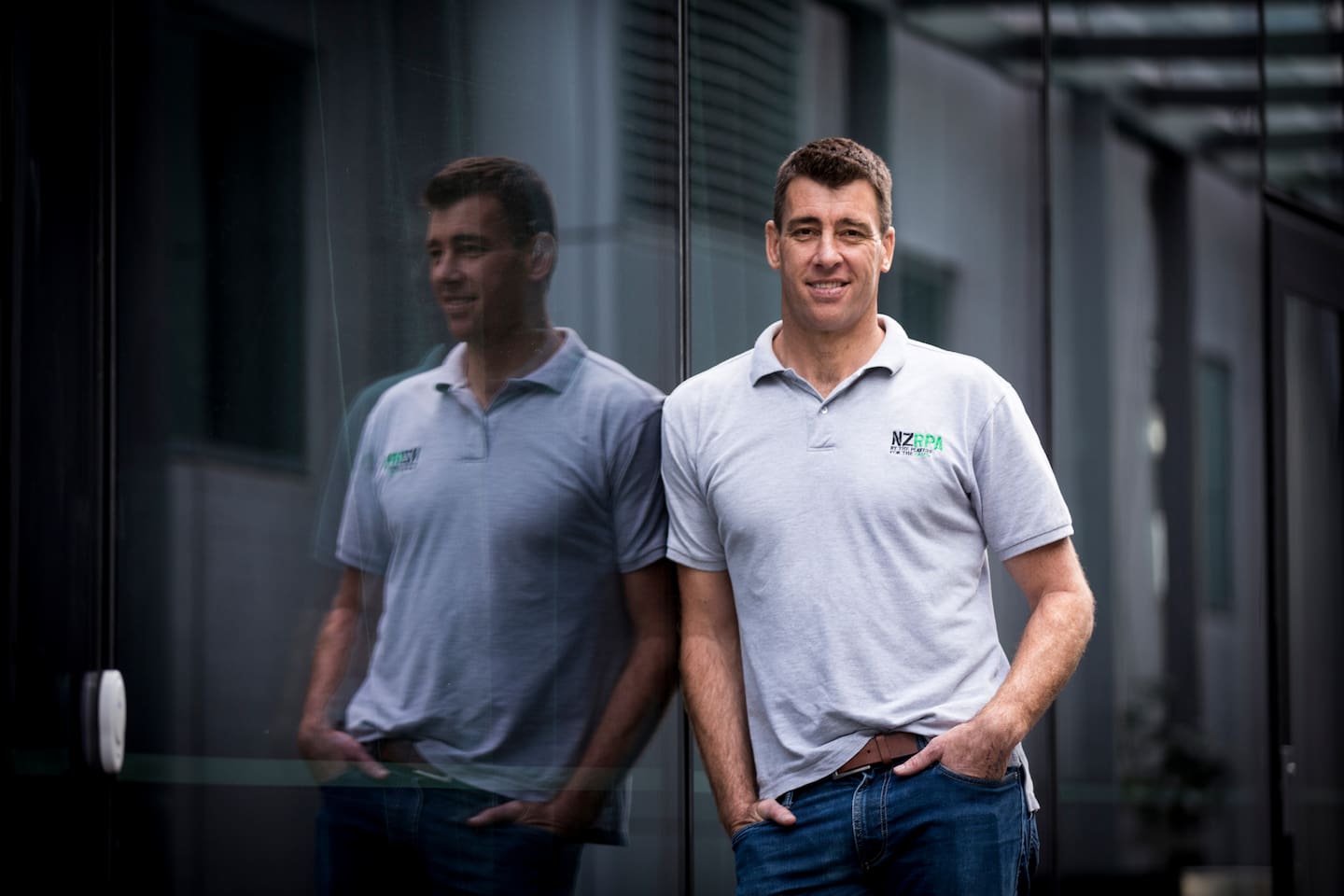
Rob Nichol believes the past should not serve as an accurate guide to Moana Pasifika’s future. Photo / Photosport
As Moana Pasifika prepare to play their final game of the season, those trying to save the club are growing in confidence that a salvage plan is far enough advanced to believe that it could yet be part of Super Rugby next year.
Following comments from Minister of Foreign Affairs and Trade Winston Peters earlier this week that an announcement about Moana was imminent, the Herald believes that it is likely that one or a combination of national governments may be ready to underwrite the club.
Rob Nichol, the chief executive of the Rugby Players’ Association, who is driving the steering committee set up to save Moana, says: “We remain cautiously optimistic that there is a solution for 2027 and beyond.
“There is a group of people who have been working hard to try to pull that off. When you look at it from a player’s perspective, we were big believers in Moana Pasifika from day one and we remain big believers in it.”
The Pacific region is currently a geopolitical hot bed, with government money pouring into island nations as part of diplomatic strategies to win influence, and sport is the vehicle through which major investments are being made.
Australia has made a $600m commitment to league in Papua New Guinea and set aside $150m to invest in rugby in Fiji, Samoa and Tonga.

But China, USA and Japan are all also on diplomatic spending missions in the Pacific, and potentially Peters was hinting that New Zealand, which houses the largest Pasifika population in the world, is preparing to make some kind of move into high-profile sports diplomacy through Moana Pasifika.
While not as financially well-equipped as the global heavyweights active in the region, the respective governments of Samoa and Tonga have a strong vested interest to see Moana Pasifika survive, as it is a critical pathway to the respective national teams.
It is also a major driver of both countries’ respective economies, with estimates suggesting that remittances from money sent home by Tongan players accounts for almost 50% of GDP.
More significantly, rugby is so entwined in the social fabric of both nations as to be considered an endemic part of Pasifika culture that it would be seriously damaged if Moana is left to collapse.
The Herald has estimated that any underwrite agreement would be in the vicinity of $12m-$16m over three years, depending on how effectively the club generated commercial income.
“If there is to be a future, then the answer and the why behind that is not too dissimilar to the first day we put the plan together,” says Nichol.
“It goes back to what is Moana Pasifika about. And it is about rugby being used as a vehicle to unite and inspire Pasifika globally – not just in Samoa, Tonga and New Zealand, but globally.
“Rugby is a vehicle to unite and connect that diaspora. And in the cases of Samoa and Tonga where you have such high levels of migration it is important to create some sense of belonging and connection across the globe.
“If you go back on that basis and say what is the secret and if Moana is going to continue, it has to be by Pasifika for Pasifika. No one else can do this.”
But it’s not certain, even if there is some kind of government(s) commitment to underwrite the club, whether that alone will be enough to persuade New Zealand Rugby to grant Moana a stay of execution.
Since the players were told five weeks ago that owner PMA was pulling out of funding the club, there have been claims of potential saviours waiting in the wings, but to date, nothing detailed or certain to assure them that Moana will survive beyond this weekend.
The players and coaching staff, who are now having their wages paid by NZR as PMA has put the club into liquidation, will be buoyed by Nichol’s optimism, but still wary of believing that Moana will be part of Super Rugby next year.
And their wariness about the future is understandable given the club has never run on a financially firm footing as it has struggled to generate gate revenue and sponsorships.
Government money could act as a safety net in the short-term, but longer term Moana would need to generate between $7m-$9m of commercial income to be viable.
That target, based on the belief that Moana generated between $1m-$1.5m of commercial income last year, is ambitious.
But Nichol believes the past should not serve as an accurate guide to Moana’s future. “When it was set up it was capital constrained, on the back of Covid, and it couldn’t be authentically connected to the Islands because of the travel restrictions and logistics, facility issues and the cost,” he says.

“It was never implemented the way we wanted. And then we had PMA come along who said they had the capital and desire to do this.
“But what’s been proven is that they didn’t have the capability against the business plan that they had. The commercials are all about being able to demonstrate and materialise that connection.
“It needs to go back to being about pathways for Pasifika players into the Samoan and Tongan national teams via Moana Pasifika.
“The team needs to have a presence in the Islands and be connected to the Islands and be playing games in the Islands, but also able to access the right high-performance environment to thrive and then have the ownership, structure and governance expertise to really develop the plan and capitalise on the opportunity from both a rugby and commercial sense.
“Moana Pasifika is different to the other clubs in many ways. It is not geographically constrained. It’s a different commercial architecture and a different business plan to other Super Rugby clubs.”
The missing piece, potentially, is a motivated Pasifika leadership team to implement the business plan and drive the club’s commercial and rugby aspirations.
However, given the importance of the club to both Samoa and Tonga and the Pasifika diaspora, it’s probable that a skilled executive team will be relatively easy to find.
It is understood that NZR wants to make a final decision on Moana’s future no later than the end of June to give the other Super Rugby clubs certainty about next year’s draw and format.
But Nichol says the steering group are working to a shorter deadline as the real pressure is coming from the diminishing number of players who will be available next year.
The club has not stood in the way of any contracted player taking alternative offers for next year, and several have already signed elsewhere and more will continue to do so until or unless there is certainty about Moana’s future.
The existing coaching group – excluding head coach Tana Umaga, who will be joining the All Blacks – are likely to be available.
Moana will play the Brumbies in Canberra on Saturday in what will be their last game of 2026, but it seems more likely now, that it won’t be their last game ever.
Gregor Paul is one of New Zealand’s most respected rugby writers and columnists. He has won multiple awards for journalism and written several books about sport.