Inside Te Pāti Māori’s vote to expel MPs Mariameno Kapa-Kingi and Tākuta Ferris
New documents released amid MP Mariameno Kapa-Kingi’s legal action against Te Pāti Māori reveal how much support remains within the party regarding last year’s expulsion of Kapa-Kingi and Te Tai Tonga MP Tākuta Ferris.
They also contain an admission from Te Pāti Māori co-leader Debbie Ngarewa-Packer that the party should have put up more “guardrails” over funding which the party claims Kapa-Kingi misused for her own gain.
Justice Paul Radich is considering the arguments put forward by Kapa-Kingi and Te Pāti Māori president John Tamihere in the High Court at Wellington on February 2.
Kapa-Kingi, the Te Tai Tokerau MP, seeks to overturn her November expulsion, clear herself of accusations of misusing funding and invalidate Tamihere’s presidency. Tamihere has opposed Kapa-Kingi’s claims.
While a decision hasn’t yet been made, the court has released a number of documents, including several sworn statements from representatives of the party’s electorates, describing the sentiment of members before the party’s vote to expel the two MPs.
The statements provide an insight into the positions of some of the electorates, which will be relevant if the party were to try again to expel Kapa-Kingi should Radich rule in her favour.

Before this month’s hearing, Tamihere offered Kapa-Kingi a new national council vote on her membership, provided she dropped her challenge to his presidency.
Kapa-Kingi refused, concerned that holding another vote wouldn’t satisfy the party’s constitution and that it would leave spending claims unaddressed.
At the November 9 hui when Kapa-Kingi’s conduct and membership were voted on, electorate representatives of Tāmaki Makaurau, Waiariki, Ikaroa-Rāwhiti and Te Tai Hauāuru agreed the MP had brought the party into disrepute and she would be expelled.
Hauraki-Waikato and Te Tai Tonga – the electorate of Tākuta Ferris, who was also expelled – abstained. Kapa-Kingi’s Te Tai Tokerau electorate did not attend the meeting.
Affidavits from some of the party’s electorate chairpersons reveal the motivations behind voting to expel Kapa-Kingi and indicate how they would consider a second vote.
Waiariki electorate co-chairman Paora Brosnan stated clearly he expected his fellow members to endorse the initial vote.
“I am certain that if the vote was held again now, the result would be the same.”
Waiariki is held by Te Pāti Māori co-leader Rawiri Waititi, who Kapa-Kingi wished to see removed from the party’s leadership. The other co-chairperson of the electorate is Monica Waititi, the MP’s sister-in law.
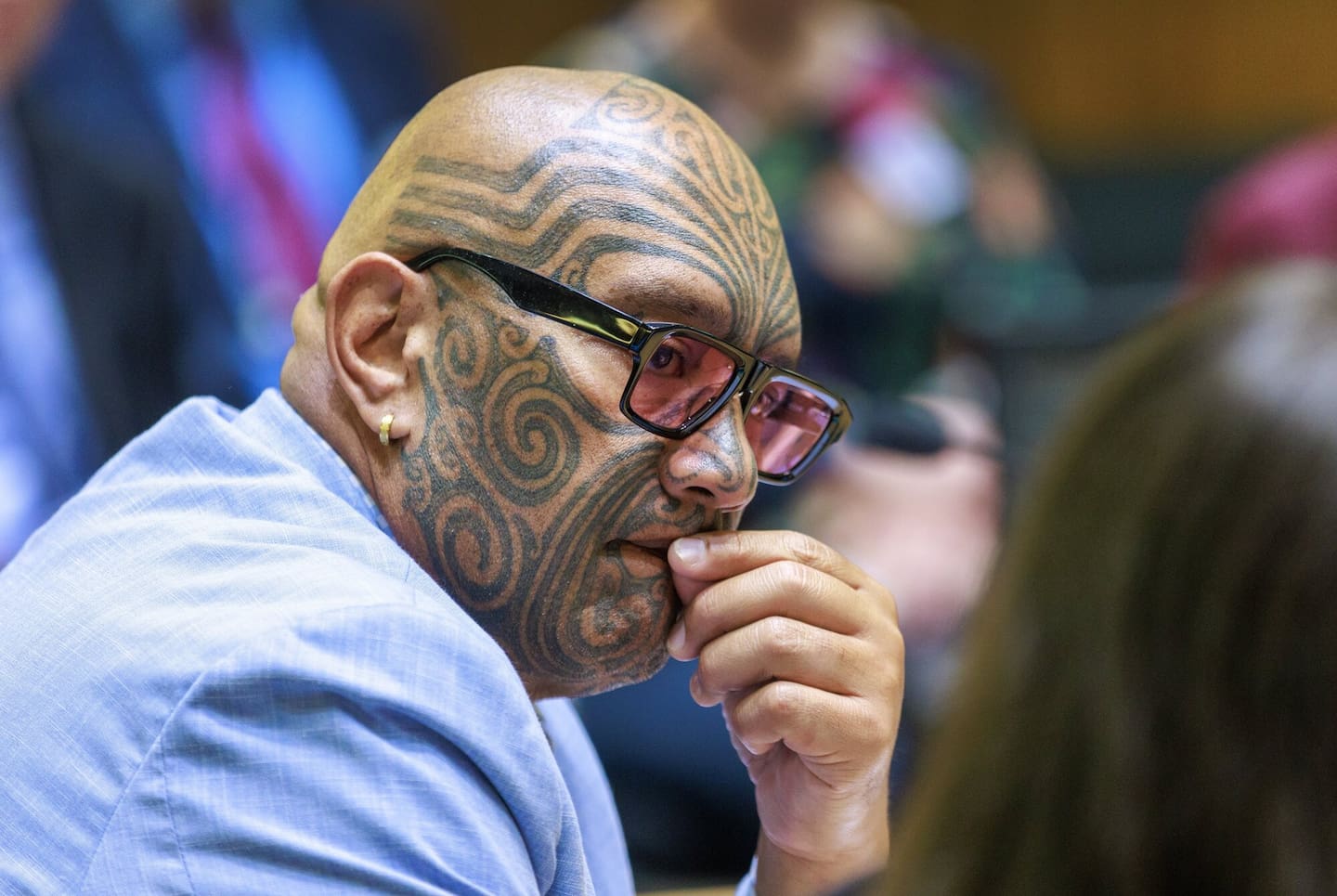
Brosnan’s brief statement said the six electorate branches all voted unanimously to expel Kapa-Kingi.
Te Tai Hauāuru was represented at the meeting by Penelope Poutu as acting chair, stepping in for Hinemoana Durie-Shedlock, who is Tamihere’s sister-in-law. Poutu said that was done because of concerns of a “perception of conflict of interest” if Durie-Shedlock voted at the hui.
In her statement, Poutu said about 100 members from the electorate met before the national council vote.
Poutu said she initially withheld revealing the council was set to vote on Kapa-Kingi’s membership, instead letting those in attendance discuss the issues, which lasted more than four hours.
“It was a very robust discussion, where feelings of disappointment and heartbreak were expressed.”
She then informed the room of the expulsion motion before giving members time to consider it.
“The branches came back to the hui, and a vote was held on whether to support the expulsion motion or not. Seven branches voted in favour of expulsion. Two branches voted in opposition to the motion,” her statement read.
“It was a very clear majority position. That position would be the same if we had to do this again now.”

Tāmaki Makaurau chairman Raymond Hall said the decision to vote in favour of the expulsion was made alongside other members of the electorate executive, which included party secretary Lance Norman, who has been one of the main figures opposing Kapa-Kingi’s legal action.
Hall said he reviewed the party’s constitution as well as the need for natural justice before coming to the decision.
“My belief was that the evidence of what Mariameno had done, which was presented to us at the 9 November hui (and beforehand), did constitute serious misconduct under our constitution.
“There had been persistent breaches of our constitution, and it was conduct that was inconsistent with our kaupapa, and the integrity of the collective mana of Te Pāti.
“Our executive remains clear that the expulsion was necessary, and we would vote again to expel if we had to.”
It was less clear-cut for those in Ikaroa-Rāwhiti, according to a fuller statement from electorate chairwoman Te Rina Lemon and new emails from another member which challenged Lemon’s account.
While acknowledging the decision was “very difficult”, Lemon referenced communication from Kapa-Kingi’s electorate, which suggested the party’s national executive members needed “tikanga training”, as “degrading” and “very offensive”.
“It was clear to me at this point that Te Tai Tokerau and Mariameno were staging a leadership challenge and were trying to destabilise Te Pāti.”
She also referenced her electorate’s own dysfunction in her former co-chairman, Robert Whaitiri, resigning before asking for his position to be reinstated, while alleging it was “not a safe time” for the electorate’s newly appointed treasurer to join.

In an October hui which consulted members of all generations, they decided to vote in favour.
“I spoke to our kuia, and they said that sometimes you need to cut off anything slowing you down on the waka in order to make sure it gets to its destination,” Lemon wrote.
“This is not meant to be cruel or mean; it is always done with aroha, for the greater good of the kaupapa.”
Lemon reflected on the decision as a “vote I wish we never had to make”.
“Mariameno is an amazing wahine toa. It was the fact of the impact the conflict was having on everyone.
“Now was not the time to be challenging the leadership as Mariameno and Te Tai Tokerau were doing.”
However, the court also released emails from Robert Whaitiri which contest Lemon’s claims and raise questions about a potential conflict of interest.
On November 8, the day before the national council hui, Whaitiri emailed Norman, saying he had been attempting to discuss with Lemon the electorate’s position and referenced an agreement to have more time to discuss the issue.
Whaitiri, the brother of former Te Pāti Māori MP Meka Whaitiri, said the electorate would “remove our current support of the national executive actions” and would be taking that stance at the next day’s hui.
He also questioned the hui’s timing: “Bro, what’s up with the 7pm hui while the Kiwis will be still playing the Samoans?”
On November 10, the day after the hui during which Ikaroa-Rāwhiti agreed to expel the MPs, Whaitiri sent an email to both Norman and Tamihere, stating, “We of Takitimu rohe do not support the decision of TPM to sack Tākuta and Mariameno”.
The email indicates confusion, given Whaitiri’s claim Lemon had supported the decision to take more time to consider the expulsion motion.
In a sworn statement to the court, Whaitiri acknowledged he had resigned as Ikaroa-Rāwhiti co-chairman but was asked to remain on the party’s national council.
In his statement, Whaitiri contested Lemon’s account, saying the electorate had approved Kapa-Kingi be suspended but had not voted on whether the MP should be expelled.
“Ms Lemon is incorrect that there was unanimous support for the suspension and expulsion of Ms Kapa-Kingi and Tākuta Ferris.”
Whaitiri also claimed all decisions in the party were being made by a “small number of persons”, noting he understood Lemon to be Tamihere’s niece.
“Essentially, the national executive and the national council are asked to simply rubber-stamp any decisions made,” he said.
“I did not agree with this process, which was why I had confirmed that the matter needed to be properly raised with our members before a decision could be made.”
Co-leader admits funding guardrails lacking
A sworn statement from party co-leader Debbie Ngarewa Packer was also released by the court, in which she admitted more “guardrails” were needed around the party’s funding.
One of the central allegations against Kapa-Kingi is misusing funds for her own personal gain in continuing to claim payment for work done on behalf of the late Tāmaki Makaurau MP Takutai Tarsh Kemp.
Kemp, who died last year, spent time off work getting treatment for kidney disease. During this time, Kapa-Kingi and her staff shared the load and were given extra funding as a result.
What is contested is whether Kapa-Kingi was eligible to claim several payments for this work, as opposed to one, which the party and messages from Kemp assert.

It formed part of concerns about Kapa-Kingi’s spending, which at one point prompted inquiries from Parliamentary Service when the MP had a forecast $133,000 overspend, which was later resolved.
Ngarewa-Packer argued it was not reasonable for Kapa-Kingi to assume continued payments would be made, noting Kemp’s opposition to it once she had returned to work.
However, Ngarewa-Packer admitted the party’s processes to account for its payments to Kapa-Kingi were not robust, saying a $33,000 payment in 2024 was made “in good faith” without a detailed breakdown of Kapa-Kingi’s work.
“In retrospect, we should have put more guardrails around the original payment so that this was clear, but we expected Ms Kapa-Kingi would want express authority before charging further amounts.”
Adam Pearse is the deputy political editor and part of the NZ Herald’s press gallery team based at Parliament in Wellington. He has worked for NZME since 2018, reporting for the Northern Advocate in Whangārei and the Herald in Auckland.