THE FACTS
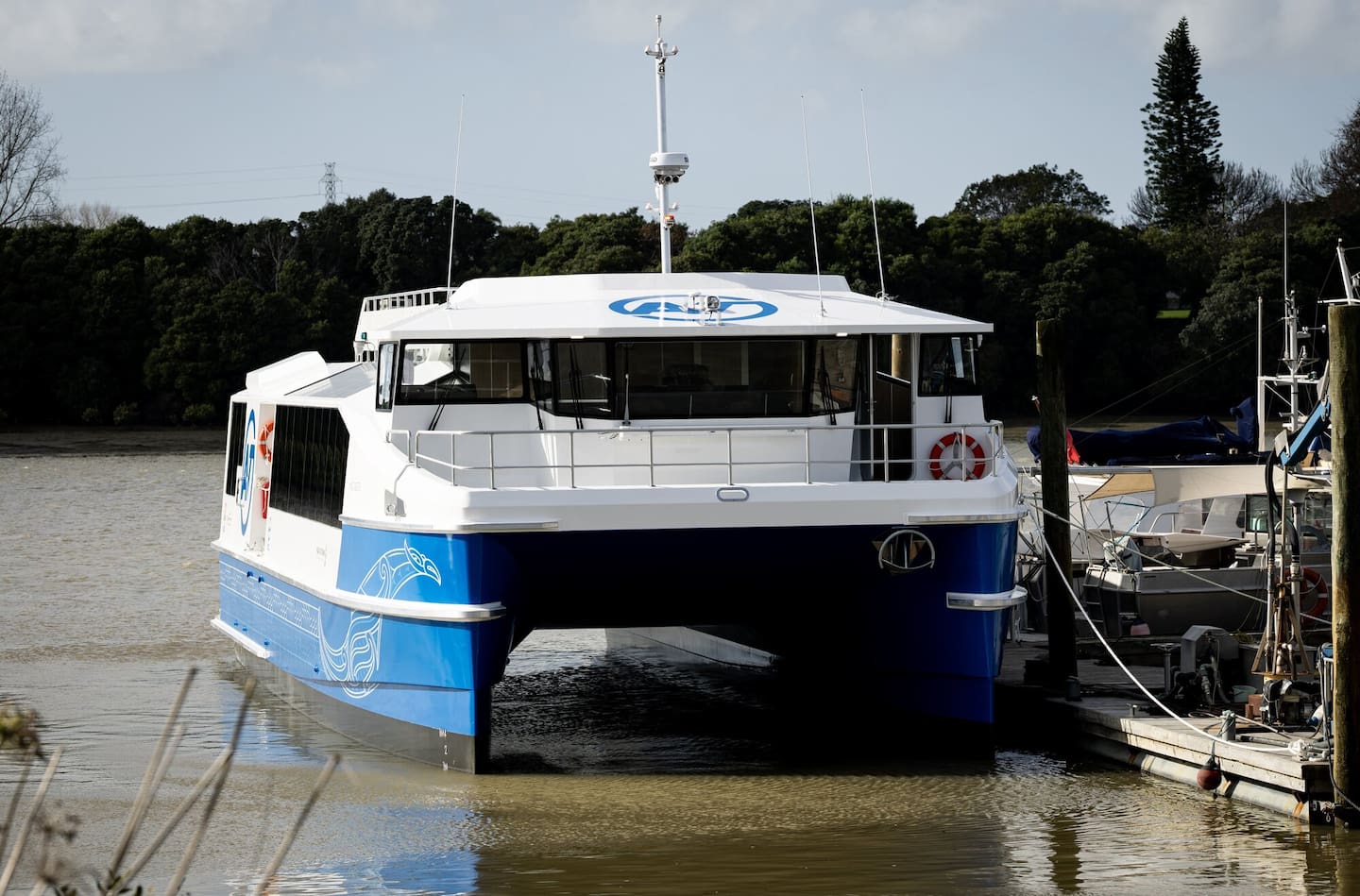
- EV Maritime’s electric ferries for Auckland Transport are undergoing sea trials and will carry passengers next year.
- Electric ferries offer long-term financial benefits and reduce harmful emissions compared to diesel ferries.
- Supporting Auckland Transport’s electrification efforts could boost exports, create high-value jobs, and strengthen energy independence.
By Michael Eaglen, CEO and co-founder of EV Maritime
New Zealand rarely gets a chance to lead a global industry. Electric fast ferries offer one of those rare opportunities: to create high-value jobs, grow exports, strengthen energy independence, and deliver cleaner, more efficient transport for Aucklanders.
As founder of EV Maritime, which is building New Zealand’s first full-size electric ferries and advising major US operators, I have seen firsthand how early domestic investment can unlock international markets while solving practical problems at home.
Flying into Auckland last week, I saw the Waitematā Harbour sparkling like a giant Welcome Home sign. It has long been my dream to see that harbour protected by a modern fleet of electric ferries, quietly carrying thousands of commuters every day.
That dream is becoming reality
The first of two EV Maritime electric ferries for Auckland Transport is undergoing sea trials and will carry passengers next year. Our research suggests it may be the fastest electric ferry in the world, although speed is secondary. The goal has always been to deliver the most efficient, capable vessels for urban public transport, and these ferries are setting a global benchmark.

Two plug-in hybrid ferries are also on the way from Whanganui, as is a charging system that is itself a world-first. Auckland is ready to expand this fleet, unlocking more routes, more benefits, and more international recognition.
No other harbour city is this close to a high-speed, zero-emission fleet. New Zealand can be proud – and the world is noticing.
But does New Zealand have the mettle to finish the job?
Backing Auckland Transport, the right way
Auckland Transport needs more ferries. It favours electric, but current funding structures make diesel vessels the only immediately available option.
Supporting AT with funding or enabling frameworks would allow it to deliver the solution which Auckland and its councillors expect – a world-class, cost-effective, zero-emission fleet – while New Zealand benefits economically, environmentally and strategically.
This isn’t about ideology – it is about the tools and decisions that deliver for the public and the country.
Electric ferries make fiscal sense
Like electric buses and cars, electric ferries cost more upfront. But over decades of operation, fuel and maintenance savings make them the better financial proposition. With more of the lifetime cost locked in early, electric ferries carry lower long-term risk. Diesel ferries burn close to a million litres annually; small price shifts swing costs, and large movements can be crippling.
Electrification avoids costly emissions. Nitrogen oxides, sulphur oxides, and diesel particulates impose real costs on our health system and economy. Government modelling (NZTA Monetised Benefits and Costs Manual, Aug 2025) shows harm from a typical diesel ferry is around $9 million annually – paid by New Zealanders through health budgets and lost productivity.
Electric ferries also reduce greenhouse gas emissions. Three-quarters of Auckland Transport’s ferry routes currently emit more carbon than the single-occupancy car trips they replace. Each electric ferry lowers the future cost of offsets while improving energy security by replacing imported diesel with locally generated electricity.
In short, diesel ferries are not just environmentally costly: they are economically imprudent.
An export industry waiting to be scaled
Beyond economics, electric ferries are creating high-value jobs nationwide: in advanced manufacturing, electrical engineering, propulsion technology, systems integration, composites, and policy design.

Supported by central and local government, Auckland Transport’s investment in EV Maritime’s ferries launched EV Maritime on to the world stage.
Since then, we have undertaken projects for US ferry operators, government agencies, and the World Bank. In 2024, we secured a contract for Angel Island Tiburon Ferry in San Francisco Bay, signed in the presence of Prime Minister Christopher Luxon.
Inside (and outside) Auckland’s first electric ferry pic.twitter.com/EvaxoNDTM8
— Chris Keall (@ChrisKeall) June 11, 2025
Three additional US contracts have followed. Partnerships in Australia and Canada position us as a serious player in a rapidly expanding global market.
These early wins are being noticed. EV Maritime was named in the global MeaningfulBusiness 100 – the only company in Oceania and one of only four mobility businesses honoured – and I was named the 2025 BLAKE Leader for Business. These awards signal that what we are building here matters both locally and globally.
This is how export industries take root: domestic capability, international credibility, and confidence in solving high-value problems overseas.
A moment of national opportunity
Electric fast ferries sit at the intersection of transport modernisation, economic development, export growth, and national identity. They offer net-positive economic returns, cleaner air, healthier communities, a quiet, zero-emissions future for our harbours, stronger energy sovereignty, and a globally relevant technology sector already gaining traction.
Supporting Auckland Transport to continue electrifying the fleet is a chance to back Kiwi innovation, strengthen our economy, and lead the world from the front, all while delivering better outcomes for commuters at lower total cost than the status quo.

Small countries rarely shape global industries. New Zealand has done it before, on and off the water, building pillars of our economy and cornerstones of national pride. Electric fast ferries are the next chapter. With smart investment and ongoing partnership between government, industry, and operators, we can secure a future where New Zealand does not merely adopt global solutions: we export them.
Let’s seize the opportunity.
Michael Eaglen is the founder and CEO of EV Maritime, a world-leader in electric fast ferries. In November, he was awarded a prestigious Blake Leader 2025 award for services to business, and is the only person in Oceania, and the first Kiwi, to be included in the Meaningful Business 100 a global list of the most influential sustainable business leaders
Catch up on the debates that dominated the week by signing up to our Opinion newsletter – a weekly round-up of our best commentary.